
For a solo planner running 15 weddings a year, Aisle Planner's up-to-15-projects tier is the wedding-specific first buy: $69.99 a month, or $839.88 over a year at the monthly rate, with timelines, budgets, guest management, layouts and seating, and RSVP websites in the same login as proposals and payments. HoneyBook Essentials costs $49 a month billed annually if AI email drafts and meeting notes matter more than wedding depth. Dubsado Premier is the cheapest client system at $525 a year, but it has no timelines or seating. Social Tables Standard covers exactly 15 events a year at $49 a month. Canva Pro adds AI design for $144 a year.
A wedding planner rarely loses money on the wedding day. The leak starts months earlier: the inquiry answered after the couple has already booked a consultation elsewhere, the timeline rebuilt from memory the night before a venue walkthrough, the seating chart redrawn every time one table of cousins changes its mind.
That is the work the best ai tools for wedding planners are meant to absorb. The honest version is narrower than the badges suggest. One system runs timelines, budgets, guest lists, and seating behind one login but names no AI assistant. One drafts client emails with real AI and takes payment in the same flow. One automates the client journey for less money, with no seating chart at all. One seats the room. One designs the proposal.
We compared five tools for the same solo wedding planner and checked every price on the vendor’s own page on 26 November 2026. No roundup prices, and no tool here pays us anything. Where a vendor does not print a fee, we say so instead of filling the gap with a guess.
Quick Answer
For a solo planner running 15 weddings a year, Aisle Planner’s up-to-15-projects tier is the wedding-specific first buy: $69.99 a month, or $839.88 over a year at the monthly rate, with timelines, budgets, guest management, layouts and seating, and RSVP websites in the same login as proposals and payments. HoneyBook Essentials costs $49 a month billed annually if AI email drafts and meeting notes matter more than wedding depth. Dubsado Premier is the cheapest client system at $525 a year, but it has no timelines or seating. Social Tables Standard covers exactly 15 events a year at $49 a month. Canva Pro adds AI design for $144 a year.
In this article
- How we compared the best ai tools for wedding planners
- The five tools at a glance
- Aisle Planner: timelines, budgets, and seating priced by active projects
- HoneyBook: AI drafts, proposals, and payments in one client system
- Dubsado: the cheaper client system, with automation behind Premier
- Social Tables: floor plans and seating that stop at 15 events
- Canva: AI design for proposals, mood boards, and signage
- The maths: what five tools really cost a solo wedding planner
- Five traps that catch wedding planners
- What to buy first
- Pros and cons
- Our verdict
- Frequently asked questions
How we compared the best ai tools for wedding planners
Every price in this guide is for the same imaginary business: one solo wedding planner, running 15 weddings a year, never carrying more than 10 active projects at once, with no wedding larger than 150 guests on a single attendee list. The planner collects one $4,000 planning-fee payment per wedding through the client system, which is $60,000 of payments processed a year. Where a vendor charges per project, per event, or a percentage of a payment, we run those same 15 weddings through the formula.
We judged each tool on five things: year-one cost for 15 weddings; whether the AI is real and which plan unlocks it; whether timelines, budgets, seating, and payments live in one system; how price moves as bookings grow; and which fees stay unprinted.
One honesty note before the numbers. These five tools do three different jobs. Aisle Planner is a wedding planning system: sales tools plus timelines, budgets, guest management, and seating. HoneyBook and Dubsado are client systems: leads, proposals, contracts, invoices, and payments, built for service businesses generally rather than weddings specifically. Social Tables is a diagramming tool: floor plans and seating charts. Canva is a design tool. You would run one planning or client system, add diagramming or design only where the work demands it, and never pay for two client systems at once.
A second honesty note: the AI labels vary in honesty. HoneyBook lists named AI features, including email drafts and a meeting notetaker. Social Tables lists an AI feature that starts diagrams from banquet paperwork. Canva sells AI design tools with usage allowances that rise by plan. Aisle Planner’s pricing page names no AI assistant; its automation is automated email responses and a scheduling assistant. Dubsado’s pricing page also names no AI assistant; its automation is workflows that trigger emails and tasks. We price each tool for the job it actually does, not the badge on the homepage.
The five tools at a glance
| Tool | Best for | Starting price | Free plan or trial | Year-one cost for 15 weddings |
|---|---|---|---|---|
| Aisle Planner | Timelines, budgets, seating, and client portal in one login | Sales Essentials $49.99 a month, no planning tools | 30-day free trial, credit card required | Up to 15 projects $839.88 at the monthly rate |
| HoneyBook | Proposals, contracts, payments, and AI drafts | Starter $29 a month billed annually | 30-day free trial, no credit card required | Essentials $588 subscription; payment fees extra |
| Dubsado | Client journeys and automated workflows on a budget | Starter $335 a year | 21-day free trial, no credit card required | Premier $525 a year |
| Social Tables | Floor plans, seating charts, and venue collaboration | Free for 3 events; Standard $49 a month billed monthly | Free plan, no credit card required | Standard $588 at the monthly rate; covers exactly 15 events |
| Canva | Proposals, mood boards, signage, and social graphics | Free; Pro US$12 a month billed yearly | Free plan; Pro 30-day trial | Pro $144 a year for one person |
The table hides the two numbers that decide most real bills. The first is the percentage fee: HoneyBook charges card processing starting at 2.9% + 25¢ on every client payment, while ACH bank transfers cost 1.5%. The second is the meter: Aisle Planner counts active projects, Social Tables counts events per year, and both meters can push a busy planner into the next tier mid-season. The sections below price both.
Aisle Planner: timelines, budgets, and seating priced by active projects
Aisle Planner Pro puts sales tools and planning tools behind one login, and for a wedding planner that consolidation is the product. Sales covers leads, brochures, proposals, contracts, invoicing, and payments. Planning adds the client portal, checklists, timelines, budgets, style guides and color palettes, vendor management, guest management and messaging, layouts and seating, and event websites with online RSVP. A planner rebuilding timelines in one app, budgets in a spreadsheet, and seating in presentation software is exactly who this replaces.
Its meter is unusual: the price follows the number of active projects you manage at once, not your team size. Every plan includes unlimited users, so assistants and day-of coordinators join without changing the bill. The pricing page we checked lists Sales Essentials at $49.99 a month, up to 15 projects at $69.99 a month, 16 to 25 projects at $109.99 a month, 26 to 50 projects at $164.99 a month, and 51 to 100 projects at $229.99 a month. Each card carries a “Save 10% Annually” label, and applicable sales tax may apply.
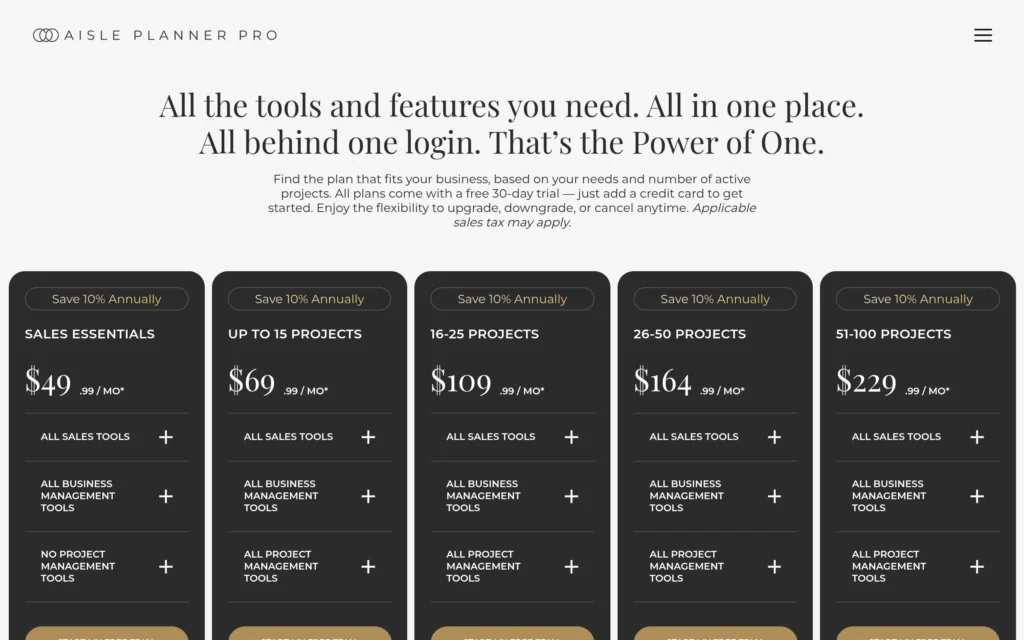
The trap is printed on the cheapest card. Sales Essentials includes lead management, proposals, contracts, and invoicing, but the planning tools — client portal, timelines, budgets, guest management, layouts and seating — start with the project tiers. A planner who buys the $49.99 headline for timelines and seating has bought the wrong tier. The first tier with planning tools is up to 15 projects at $69.99 a month, which is $839.88 over a year at the monthly rate, or $55.99 per wedding across 15 weddings. The page labels a 10% annual saving but does not print the annual total, so budget on the monthly-rate year until checkout shows the annual figure.
The trial needs care. All plans come with a free 30-day trial, but a credit card is required to start, so a forgotten cancel date means paying for month two. Upgrade, downgrade, or cancel anytime is promised, which softens the project meter.
On AI, honesty matters. Aisle Planner’s pricing page names no AI assistant. Its automation story is automated email responses to new leads and a scheduling assistant, which save minutes without pretending to think. That is not a weakness if timelines and seating are the pain. It is a weakness if the buying reason was AI-drafted client emails, because that job belongs to HoneyBook in this comparison. Buy Aisle Planner for wedding depth in one login, and judge its automation as automation.
HoneyBook: AI drafts, proposals, and payments in one client system
HoneyBook is a clientflow platform for independent service businesses. For a wedding planner, the useful chain is short: an inquiry arrives through a contact form, the proposal combines service selection, contract, and payment in one flow, and the client portal holds the project details afterwards. Invoices, payment schedules, autopay, and automatic payment reminders sit in the same account, so the deposit chase stops being a separate spreadsheet.
The AI is named and specific. HoneyBook’s pricing page lists HoneyBook AI features including priority lead notifications with predictive alerts about high-value leads, email drafts, a meeting notetaker that joins video calls to generate notes, transcripts, and action items, project recaps delivered before meetings, lead enrichment, and Gmail suggestions that analyse your inbox for potential projects. For a planner, the notetaker and the email drafts are the daily value: the venue walkthrough becomes action items, and the vendor follow-up starts as a draft instead of a blank box.
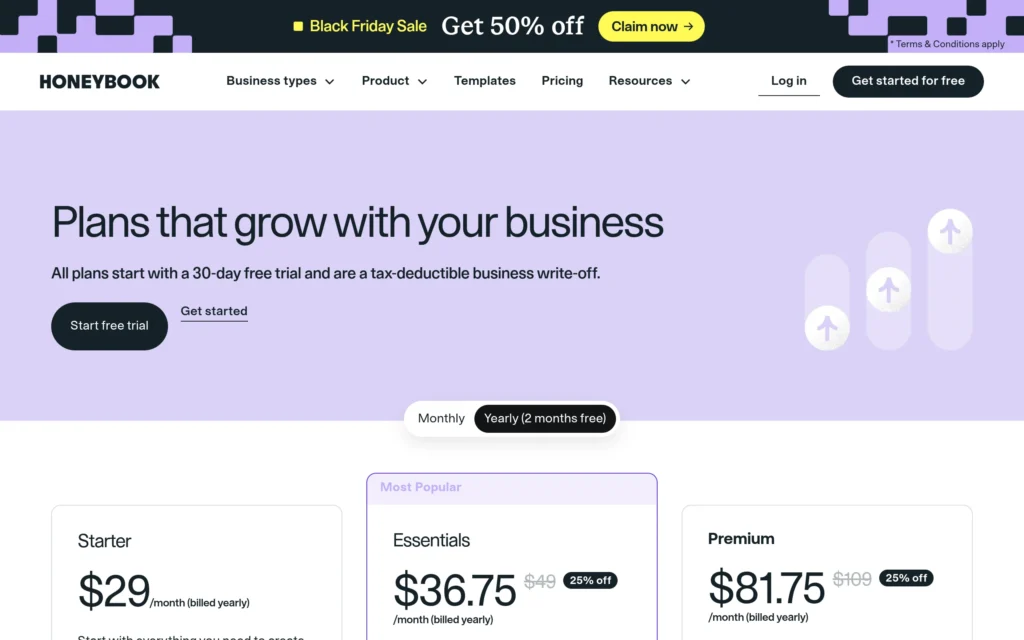
Pricing is billed annually on the page we checked: Starter is $29 a month, Essentials is $49 a month, and Premium is $109 a month, each billed annually and excluding any applicable sales tax. Every plan includes unlimited clients and projects. The gates matter more than the headline. Automations that trigger follow-up emails, files, or tasks are not on Starter. The scheduler is limited to one session type on Starter and unlimited on Essentials. Team members start at Essentials, with up to two, while Premium removes the team limit and adds multiple companies.
The trial is low-friction: 30 days free, no credit card required. At $588 a year, Essentials costs $39.20 per wedding across 15 weddings before payment fees. Starter saves $240 a year, but a planner who needs automated follow-ups will feel the missing pieces in the first busy month.
Payment fees are the number to model before you commit. HoneyBook states that card processing fees start at 2.9% + 25¢, and ACH bank transfers cost 1.5%. On one $4,000 planning-fee payment, the starting card rate is $116.25, while ACH is $60. Across 15 payments, that is at least $1,743.75 in card fees against $900 on ACH. The subscription is not the bill. The payment rail is the bill, and steering couples toward ACH saves at least $843.75 a year at this volume.
HoneyBook’s limit is wedding depth. It manages the client relationship and the money, not the room. There is no seating chart, no floor plan, no guest-list engine, and no wedding timeline comparable to a planning system. A planner whose pain is proposals and payments should start here. A planner whose pain is timelines and seating should read the Aisle Planner section first, because buying both systems means paying twice for overlapping client management.
Dubsado: the cheaper client system, with automation behind Premier
Dubsado is the budget client system in this comparison, and its pricing page is refreshingly plain: two plans, both in US dollars, with annual billing saving two months. Starter costs $335 a year. Premier costs $525 a year. Both include unlimited projects and clients, invoicing and payment plans, form and email templates, client portals, calendar connection, and mobile app access. For a wedding planner, that covers the inquiry form, the contract, the payment schedule, and the client portal — the business half of the job.
The gates sit exactly where a busy planner will feel them. Starter includes one active lead capture form, and excludes scheduling, automated workflows, public proposals, bookkeeping integration, and Zapier. Premier removes the form limit and adds all five. A planner who wants an inquiry to trigger a welcome email, a scheduler link, and a follow-up sequence without touching the keyboard needs Premier. The gap between the plans is $190 a year, which is the price of automation in this comparison.
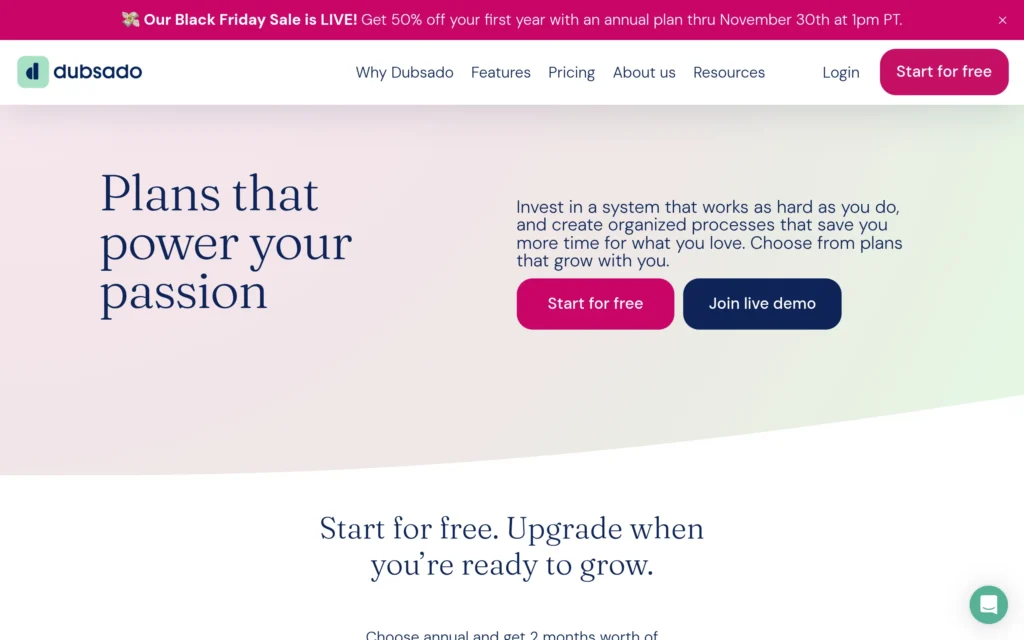
At $525 a year, Premier costs $35 per wedding across 15 weddings — the cheapest complete client system here. Starter at $335 a year looks cheaper still, but a planner who rebuilds every follow-up by hand will pay the difference in evenings. The trial softens the decision: 21 days with full, unlimited access to Premier, and no credit card required. That is long enough to run one real inquiry through a workflow before paying anything.
Team pricing is printed rather than negotiated. Both plans include three additional users at no extra cost; beyond that, 4 to 10 users cost $25 a month, 11 to 20 cost $45, and 21 to 30 cost $60. An additional brand costs $10 a month.
On AI, honesty matters again. Dubsado’s pricing page names no AI assistant. Its time saving is automation: workflows that send emails, files, and tasks when a trigger fires. That is genuinely useful, and it is not AI drafting your vendor emails. Dubsado also has no wedding timelines, no budgets, no guest management, and no seating. It is the client system to buy when the budget is tight and the wedding-day planning happens elsewhere. Pair it with a planning system and you are paying for two logins; pair it with spreadsheets and you keep the midnight timeline rebuilds.
Social Tables: floor plans and seating that stop at 15 events
Social Tables, now sold as Cvent Event Diagramming, does one job deeply: to-scale floor plans, seating, and attendee management that planners and venues edit together. Build the room, seat guests from a list, share the diagram, and export a PDF for the venue. Its own pricing page calls Standard best for wedding and social event planners, which is why it earns a place here despite Aisle Planner also offering layouts and seating.
The AI claim is specific and modest. The pricing page describes advanced diagramming features including a BEO uploader that uses AI to get started on events and diagrams based on information in your banquet event order. Advanced features also include diagram status, favourites, templates, reusable layouts, and table numbering. That is a head start on a diagram, not a planner in a box. The room still needs your judgment; the software removes the blank-page hour.
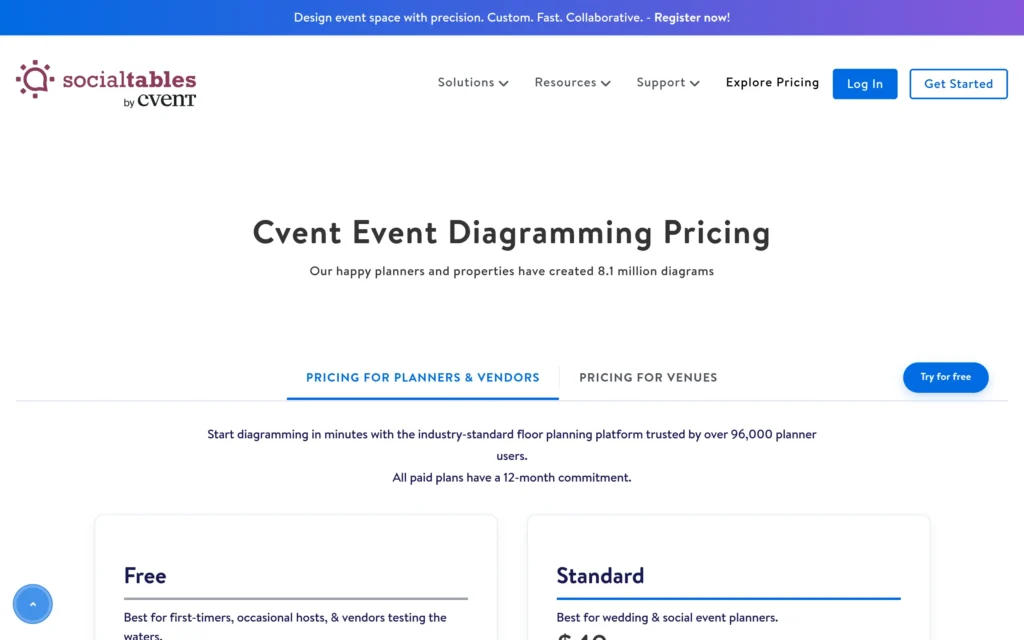
Pricing is where the meter sits. The free plan costs $0 for one user, 3 events, 2 diagrams per event, and 150 attendees per attendee list, with no credit card required to sign up. Standard costs $49 billed monthly for 15 events a year. Pro costs $150 billed monthly for 50 events a year and 3 diagrams per event. Premium costs $320 billed monthly for unlimited events, diagrams, and attendees. Annual billing saves 18% on Standard, 17% on Pro, and 9% on Premium, as labelled on the page. Every paid plan carries a 12-month commitment, even when billed monthly.
At 15 weddings a year, Standard fits exactly — and only exactly. Its 15-event cap means wedding sixteen forces Pro at $1,800 over a year at the monthly rate. At 15 weddings, Standard is $588 over a year at the monthly rate, or $39.20 per wedding. A planner running 12 weddings a year stays comfortably inside Standard. A planner running three weddings can stay free. The same tool is cheap, reasonable, or expensive depending entirely on event count, which is why the meter matters more than the headline.
Two more limits deserve a trial before commitment. Free, Standard, and Pro cap an attendee list at 150 attendees, so a 200-guest wedding needs Premium or a workaround. Paid tiers include one user account with unlimited collaborators. Social Tables earns its place when venues already share layouts in it; as a solo planner’s only system, it leaves proposals, contracts, timelines, and payments to another tool.
Canva: AI design for proposals, mood boards, and signage
Canva is the design layer of this stack: proposals, mood boards, signage, menus, social posts, and welcome signs that look designed rather than assembled. For a wedding planner, the value is speed with brand control. A Brand Kit holds colours, fonts, and logos, premium templates remove the blank page, and AI tools such as Magic Write and Magic Layers help draft copy and rebuild layouts. The couple sees polish. The planner avoids a design fee for routine graphics.
Pricing is per person and published in US dollars. The free plan costs US$0 for one person, with real templates and editing plus 5GB of storage. Canva Pro costs US$12 a month per person billed yearly, which is US$144 a year, or US$18 month-to-month. Pro is a single-user plan: only one person can hold the subscription. It adds unlimited premium content, Brand Kit access, 100GB of cloud storage, and full access to AI tools. A 30-day trial is available, and Canva notes that AI allowance during the trial matches the free plan, with the full allowance on the paid plan.
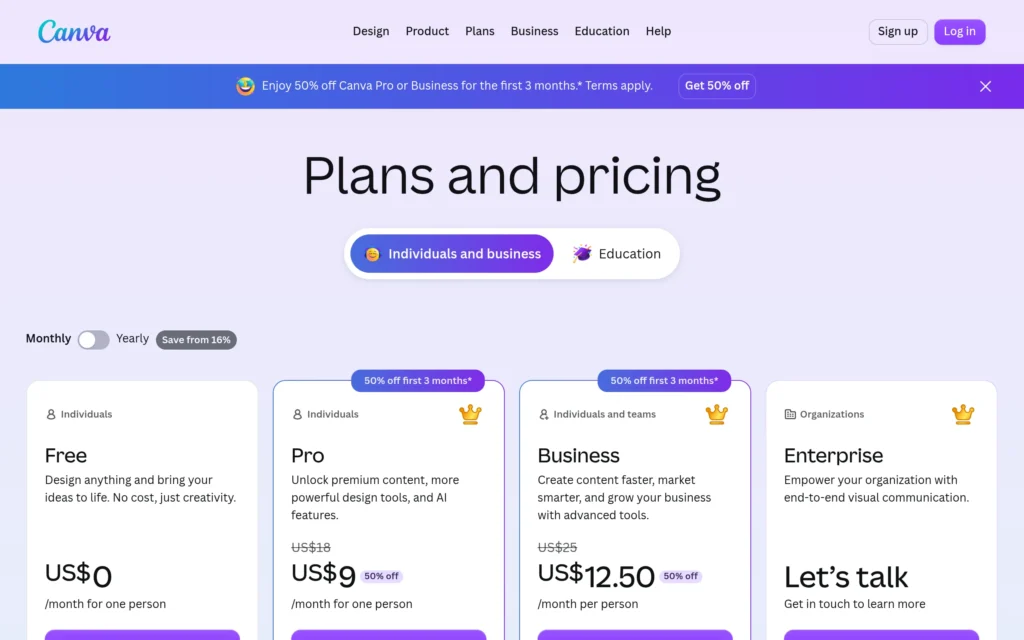
Canva Business is the team step at US$20.83 a month per person billed yearly, or US$25 month-to-month, with collaboration, approvals, and higher AI limits. A solo planner does not need it.
The pricing page also showed a promotion on the day we checked: 50% off Pro or Business for the first three months on monthly plans, with terms applying. Promotions expire. Budget on the list price, treat the discount as a trial subsidy, and confirm the renewal figure before the third month ends. At list price, Pro on annual billing costs $9.60 per wedding across 15 weddings, which is the cheapest line in this guide. Its limit is scope: Canva designs the documents around the wedding. It does not manage leads, contracts, seating, or payments.
The maths: what five tools really cost a solo wedding planner
Start with the main system, because every planner needs exactly one. Aisle Planner’s first planning tier is $839.88 over a year at the monthly rate. HoneyBook Essentials is $588 a year billed annually. Dubsado Premier is $525 a year. Those three overlap on leads, proposals, contracts, and invoicing, so buying all three means paying $1,952.88 a year for three front doors to the same client. Pick the system whose depth matches the pain: Aisle Planner for timelines and seating, HoneyBook for AI drafts and payments, Dubsado for the lowest price with automation.
Per wedding, at 15 weddings a year, the subscriptions run $55.99 for Aisle Planner’s 15-project tier, $39.20 for HoneyBook Essentials, $35 for Dubsado Premier, $39.20 for Social Tables Standard, and $9.60 for Canva Pro on annual billing. A quiet season does not shrink the subscription; it raises the cost hiding inside every wedding.
Now add the fees the headlines hide. HoneyBook card processing starts at 2.9% + 25¢, which is $116.25 on a $4,000 payment and at least $1,743.75 across 15 payments. ACH at 1.5% is $60 per payment and $900 across the year. Steering couples to ACH saves at least $843.75 a year at this volume, which is more than the Essentials subscription and Canva Pro combined. Aisle Planner and Dubsado do not print their payment processing rates on the pricing pages we checked, so treat those rails as costs you have not been shown and confirm them before you route deposits through either system.
The stack test shows the real saving. Buying Aisle Planner at $839.88, HoneyBook Essentials at $588, Dubsado Premier at $525, Social Tables Standard at $588, and Canva Pro at $144 together costs $2,684.88 in year one, before payment fees. Running Aisle Planner plus Canva Pro instead costs $983.88 a year and covers timelines, budgets, seating, proposals, payments, and design in two logins. The difference is $1,701 a year, which is the price of the duplicate client systems and the diagramming tier you did not buy. Add Social Tables only when venue collaboration or daily seating changes prove the need, and add HoneyBook only when AI drafts beat wedding depth.
Growth flips some of the order: percentage fees grow with revenue, project meters grow with concurrent work, and event meters grow with volume. Price each tool at next year’s workload.
Five traps that catch wedding planners
First, the percentage fee under the headline. HoneyBook Essentials at $49 a month sounds like the whole bill until card processing starts at 2.9% + 25¢ on every client payment. At $60,000 processed, that is at least $1,743.75 a year. Price the payment rail at your real volume, and offer ACH where couples accept it.
Second, the planning-tools gate. Aisle Planner’s $49.99 Sales Essentials card excludes the project tools: timelines, budgets, guest management, and seating live from the $69.99 tier upward. The feature in the headline and the price in the headline are rarely the same tier. Find the gate before you compare prices.
Third, the event-count meter. Social Tables Standard covers 15 events a year, and every paid plan carries a 12-month commitment. Wedding sixteen forces Pro at $150 a month. Count last year’s weddings honestly, including the small ones, before choosing the tier.
Fourth, the trial that wants a card. Aisle Planner’s 30-day trial requires a credit card to start, while HoneyBook’s 30-day trial and Dubsado’s 21-day trial require no credit card. Only one of the three can bill you for forgetting. Set the cancel reminder on day one.
Fifth, the unprinted fee. HoneyBook prints its card and ACH rates on its pricing page. Aisle Planner and Dubsado do not print payment processing rates on the pricing pages we checked. Where a vendor prints no rate, treat the missing number as a cost you have not been shown, not a cost of zero, and confirm it in writing before you take deposits through the system.
What to buy first
Buy one main system first, and let the wedding work decide the rest. A solo planner whose pain is timelines, budgets, guest lists, and seating should start with Aisle Planner’s 15-project tier, run the 30-day trial on one real wedding, and set the cancel reminder before the card on file turns into a charge.
A planner whose pain is slow proposals, payment chasing, and vendor follow-ups should start with HoneyBook Essentials and watch whether the AI email drafts and meeting notes survive contact with real couples. A planner on the tightest budget should start with Dubsado Premier’s 21-day no-card trial and accept that timelines and seating live elsewhere. Our HoneyBook vs Dubsado comparison covers the client-system choice in more depth if proposals and automations are the deciding factor.
Add Canva Pro when design becomes weekly work; at $144 a year it is the cheapest upgrade here. Add Social Tables when venues share layouts in it, priced at Standard up to 15 events a year and Pro beyond that. Whichever system wins your trial, the discipline is the same: one main system, priced at next year’s workload.
Our free AI Cost Calculator takes the prices above and turns them into a monthly and yearly figure for your own wedding count and payment volume, so you can test the percentage fees and project meters before any trial starts. Run your real numbers there, then trial the cheapest system that survives your busiest month.
Pros and cons
Aisle Planner. Pros: sales tools and wedding planning tools behind one login, including timelines, budgets, guest management, layouts and seating, and RSVP websites; unlimited users on every plan; pricing follows active projects, with upgrade, downgrade, or cancel flexibility. Cons: the $49.99 tier excludes the planning tools; the 30-day trial requires a credit card; the pricing page names no AI assistant; the annual total is labelled as a 10% saving rather than printed, and payment processing rates are not printed on the pricing page.
HoneyBook. Pros: proposals, contracts, invoices, payments, and a client portal in one system; named AI features including email drafts, a meeting notetaker, project recaps, and lead enrichment; unlimited clients and projects on every plan; a 30-day trial with no credit card required. Cons: automations and team members start at Essentials, not Starter; card processing starting at 2.9% + 25¢ can exceed the subscription at volume; no seating charts, timelines, or guest management; annual billing is the priced basis on the page we checked.
Dubsado. Pros: the cheapest complete client system here at $525 a year for Premier; unlimited projects and clients on both plans; three additional users included at no extra cost; a 21-day Premier trial with no credit card required. Cons: scheduling, automated workflows, and public proposals are Premier only, so Starter at $335 a year leaves the automation out; the pricing page names no AI assistant; no wedding timelines, budgets, or seating; payment processing rates are not printed on the pricing page.
Social Tables. Pros: to-scale floor plans with seating and attendee management; unlimited collaborators for venue teamwork; an AI BEO uploader to start diagrams from banquet paperwork on advanced tiers; a free plan for three events with no credit card required. Cons: Standard stops at 15 events a year; every paid plan carries a 12-month commitment; attendee lists cap at 150 below Premium; paid plans include one user account.
Canva. Pros: a genuinely usable free plan; Pro at US$144 a year adds premium content, Brand Kit, 100GB of storage, and full AI tool access; Business adds collaboration, approvals, and higher AI limits for teams; a 30-day Pro trial. Cons: Pro is single-user, so team editing needs per-seat Business pricing; AI allowance during the trial matches the free plan; promotions such as 50% off the first three months expire into list price; design only, with no client management, seating, or payments.
Our verdict
Aisle Planner’s 15-project tier is the best first buy for a solo wedding planner who wants the wedding itself managed in one place: $839.88 a year at the monthly rate for timelines, budgets, guest management, seating, proposals, and payments, with unlimited users when an assistant joins. Its pricing page names no AI assistant, and its trial wants a card, so buy it for wedding depth rather than AI. HoneyBook Essentials is the better buy when AI email drafts, meeting notes, and payment chasing are the pain, at $588 a year plus payment fees that demand respect: steering couples to ACH saves at least $843.75 a year at $60,000 processed.
Dubsado Premier earns its place when the budget decides, at $525 a year with automation and three extra users included. Canva Pro earns its $144 a year the first week proposals and signage become routine. Social Tables earns its place when venues collaborate in it, priced at Standard up to fifteen events a year. Whichever system wins your trial, buy one main system, price the meters and percentage fees before the headline, and let the trial month argue with your busiest week.
Frequently asked questions
What is the cheapest AI tool for a solo wedding planner?
Dubsado Premier is the cheapest complete client system here: $525 a year with unlimited projects and clients, scheduling, automated workflows, and public proposals. It names no AI assistant on its pricing page, so the saving is automation rather than AI drafting. HoneyBook Essentials costs $588 a year billed annually with named AI email drafts and a meeting notetaker. Canva Pro is cheaper at US$144 a year, but it only covers design.
How much does HoneyBook cost with payment fees?
Essentials costs $588 a year billed annually. Payment fees sit on top: card processing starts at 2.9% + 25¢ per payment, and ACH bank transfers cost 1.5%. On fifteen $4,000 planning-fee payments, card fees run at least $1,743.75 a year at the starting rate, while ACH costs $900. Budget the payment rail at your real processed volume, not the subscription alone.
Which Aisle Planner plan includes timelines and seating?
The project tiers do. Sales Essentials at $49.99 a month includes lead management, proposals, contracts, and invoicing, but not the planning tools. Timelines, budgets, guest management, layouts and seating, and RSVP websites start with the up-to-15-projects tier at $69.99 a month. Every plan includes unlimited users, and the 30-day trial requires a credit card.
Why does Social Tables cost $150 a month after 15 weddings?
Because Standard stops at 15 events a year. Standard costs $49 billed monthly for 15 events, while Pro costs $150 billed monthly for 50 events a year. A planner running 15 weddings fits Standard at $588 over a year at the monthly rate before the labelled 18% annual saving. Wedding sixteen needs Pro, which is $1,800 over a year at the monthly rate. Every paid plan carries a 12-month commitment, and attendee lists cap at 150 below Premium.
Does Dubsado Starter include scheduling and workflows?
No. Dubsado’s pricing page lists scheduling, automated workflows, public proposals, bookkeeping integration, and Zapier as Premier features. Starter at $335 a year includes unlimited projects and clients, invoicing, templates, client portals, and one active lead capture form. Premier at $525 a year removes the form limit and adds the automation. The 21-day free trial gives full Premier access with no credit card required, so you can test the workflows before paying.
Price note — updated 26 November 2026: Prices in this post were checked on 26 November 2026. When you are reading this, the price may be lower or higher, plans may have changed, and trial terms may differ. Check the official pricing page before you buy, and confirm any unprinted fee, such as a payment processing rate, with the vendor in writing.
Sources
- Aisle Planner pricing: https://www.aisleplanner.com/pricing
- HoneyBook pricing: https://www.honeybook.com/lp/pricing
- Dubsado pricing: https://www.dubsado.com/pricing
- Social Tables pricing: https://www.socialtables.com/pricing/
- Canva pricing: https://www.canva.com/pricing/
- Canva plan comparison: https://www.canva.com/learn/canva-pro-vs-canva-enterprise/
Pros
- Aisle Planner: sales tools and wedding planning tools behind one login, including timelines, budgets, guest management, layouts and seating, and RSVP websites; unlimited users on every plan; pricing follows active projects, with upgrade, downgrade, or cancel flexibility.
- HoneyBook: proposals, contracts, invoices, payments, and a client portal in one system; named AI features including email drafts, a meeting notetaker, project recaps, and lead enrichment; unlimited clients and projects on every plan; a 30-day trial with no credit card required.
- Dubsado: the cheapest complete client system here at $525 a year for Premier; unlimited projects and clients on both plans; three additional users included at no extra cost; a 21-day Premier trial with no credit card required.
- Social Tables: to-scale floor plans with seating and attendee management; unlimited collaborators for venue teamwork; an AI BEO uploader to start diagrams from banquet paperwork on advanced tiers; a free plan for three events with no credit card required.
- Canva: a genuinely usable free plan; Pro at US$144 a year adds premium content, Brand Kit, 100GB of storage, and full AI tool access; Business adds collaboration, approvals, and higher AI limits for teams; a 30-day Pro trial.
Cons
- Aisle Planner: the $49.99 tier excludes the planning tools; the 30-day trial requires a credit card; the pricing page names no AI assistant; the annual total is labelled as a 10% saving rather than printed, and payment processing rates are not printed on the pricing page.
- HoneyBook: automations and team members start at Essentials, not Starter; card processing starting at 2.9% + 25¢ can exceed the subscription at volume; no seating charts, timelines, or guest management; annual billing is the priced basis on the page we checked.
- Dubsado: scheduling, automated workflows, and public proposals are Premier only, so Starter at $335 a year leaves the automation out; the pricing page names no AI assistant; no wedding timelines, budgets, or seating; payment processing rates are not printed on the pricing page.
- Social Tables: Standard stops at 15 events a year; every paid plan carries a 12-month commitment; attendee lists cap at 150 below Premium; paid plans include one user account.
- Canva: Pro is single-user, so team editing needs per-seat Business pricing; AI allowance during the trial matches the free plan; promotions such as 50% off the first three months expire into list price; design only, with no client management, seating, or payments.
Aisle Planner's 15-project tier is the best first buy for a solo wedding planner who wants the wedding itself managed in one place: $839.88 a year at the monthly rate for timelines, budgets, guest management, seating, proposals, and payments, with unlimited users when an assistant joins. Its pricing page names no AI assistant, and its trial wants a card, so buy it for wedding depth rather than AI. HoneyBook Essentials is the better buy when AI email drafts, meeting notes, and payment chasing are the pain, at $588 a year plus payment fees that demand respect: steering couples to ACH saves at least $843.75 a year at $60,000 processed.Dubsado Premier earns its place when the budget decides, at $525 a year with automation and three extra users included. Canva Pro earns its $144 a year the first week proposals and signage become routine. Social Tables earns its place when venues collaborate in it, priced at Standard up to fifteen events a year. Whichever system wins your trial, buy one main system, price the meters and percentage fees before the headline, and let the trial month argue with your busiest week.
1 thought on “Best AI Tools for Wedding Planners (2026): 5 Compared by Real Price”